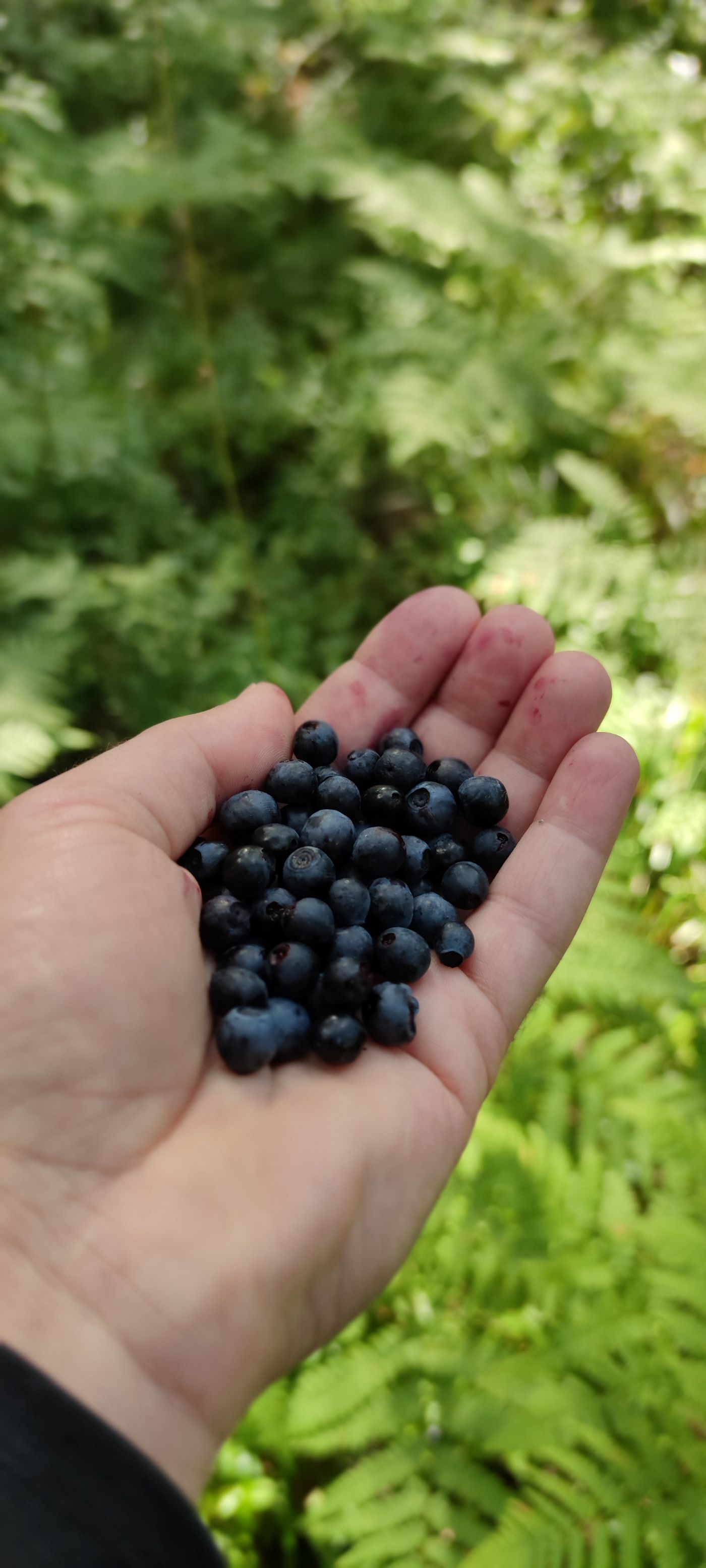
There are moments when something unexpected slows you down completely, when you come across something so simple and yet so quietly remarkable that you instinctively stop, not because you planned to, but because it feels like the right thing to do. One of those moments happens easily in the Swedish summer, somewhere between a walk through the forest and the soft light filtering through the trees, when you suddenly notice that the ground beneath your feet is covered in blueberries.
No signs, no fences, no indication that they are meant to be found.
Just nature, offering something generous without asking for anything in return.
It is the kind of discovery that feels almost private, even though it is not, as if you have stumbled upon something that was always there but only reveals itself when you are willing to slow down enough to see it. Crouching down, picking a handful, tasting one while still standing in the silence of the forest, there is a moment when everything aligns—the air, the light, the taste—and it becomes clear that this is something worth remembering.
July in Sweden carries that feeling in many ways, but especially through its berries.
The forests around Stockholm turn into quiet treasure maps, not marked by paths or instructions, but by instinct and curiosity, and for anyone willing to walk a little further, to step off the obvious trails, the reward is often the same: clusters of wild blueberries, small, intense, deeply flavored, carrying something that feels both fresh and ancient at the same time.
For those of us who come from places where food is always at the center of attention, where every ingredient is discussed, debated, refined, discovering this kind of simplicity feels almost surprising, and yet completely natural. Because in the end, the best ingredients rarely need much explanation—they speak for themselves.
And these blueberries do exactly that.
They carry a depth of flavor that feels familiar in an unexpected way, reminding of other landscapes, other mountains, other summers, while still belonging entirely to this place. They do not try to impress, they simply exist at the right moment, and that is enough.
Finding them is part of the experience.
There is no need for precise directions, no hidden map that needs to be revealed, only the willingness to walk into the forest and let the surroundings guide you. Places like Nackareservatet or Hellasgården are close enough to the city to feel accessible, yet far enough to offer that sense of quiet, while a short journey further out into the archipelago can bring you into landscapes where the only sounds are wind, water, and the occasional bird moving through the trees.
It is, in its own way, one of the simplest pleasures Sweden offers.
And once you have them, the question becomes what to do next.
Jam is the obvious answer, and for good reason. There is something deeply satisfying in turning fresh berries into something that lasts a little longer, something that can be opened weeks later and still carry a trace of summer. But blueberries invite more than that. They invite curiosity.
They can be dried slowly, becoming something concentrated and slightly tart, perfect for adding depth to simple dishes. They can be gently pickled, balancing sweetness and acidity in a way that pairs unexpectedly well with stronger flavors. Or they can remain exactly what they are, transformed only slightly into something that highlights their natural character.
That is where sorbet enters.
Not as a complicated dessert, but as a continuation of the same idea: take something already complete and bring out what is already there. Blended with honey, lifted with lemon, and balanced with just a touch of acidity, the result is something that feels both refreshing and grounded, something that cleans the palate and lingers just enough to stay with you.
Served simply, with a small pinch of salt and a drop of olive oil, it becomes something more than expected, not because it tries to surprise, but because it allows small details to come forward in a quiet way. And for those willing to go a step further, a touch of aged balsamic can add another layer, deepening the flavor without taking away from its clarity.
Even the choice of sweetener matters.
Honey, in this case, does more than add sweetness; it changes the texture, keeping the sorbet smooth and bringing with it a subtle complexity that sugar alone would not offer. It is a small detail, but like many small details, it makes a difference you can feel more than you can explain.
And then there are the unexpected connections.
Sometimes they come in the form of a drink, something that reflects the same landscape in a different way, capturing the essence of the forest in a glass. Discovering something like a well-made blueberry beverage, with structure and freshness, can feel like finding a parallel expression of the same ingredient, something that belongs naturally alongside the food without needing to compete with it.
Because that is what this time of year is really about.
Not abundance for the sake of it, but the quiet layering of experiences—walking, picking, tasting, sharing—each one adding something small to the whole.
At Lasagnariet, that idea of layers is at the center of everything we do, not only in the dishes we prepare, but in the way we think about seasons, ingredients, and the rhythm of the year. Blueberry season is one of those layers, brief and intense, something that cannot be stretched or replaced, only experienced while it lasts.
Whether it is found in the forest, transformed into something new, or simply enjoyed as it is, it carries the same message.
Take the time.
Taste it properly.
Let it be enough.
And perhaps, after a warm meal, after a long day outside, after everything has slowed down just a little, there is space for something small and sweet to close the moment, something that reminds you where you are and why it matters.
Because life, as always, is made of layers.
And some of them taste like blueberries in July.