Vegetarian Lasagna Is Not the Alternative
In early spring, when the calendar says March but the air in Sweden still feels like February, food has a small but important job to do: remind us that warmth is coming.
This is exactly the moment when vegetarian lasagna does its best work.
Not as a backup.
Not as “the lighter option.”
And definitely not as the dish you choose because there’s nothing else.
Vegetarian lasagna, when it’s done properly, is a statement.
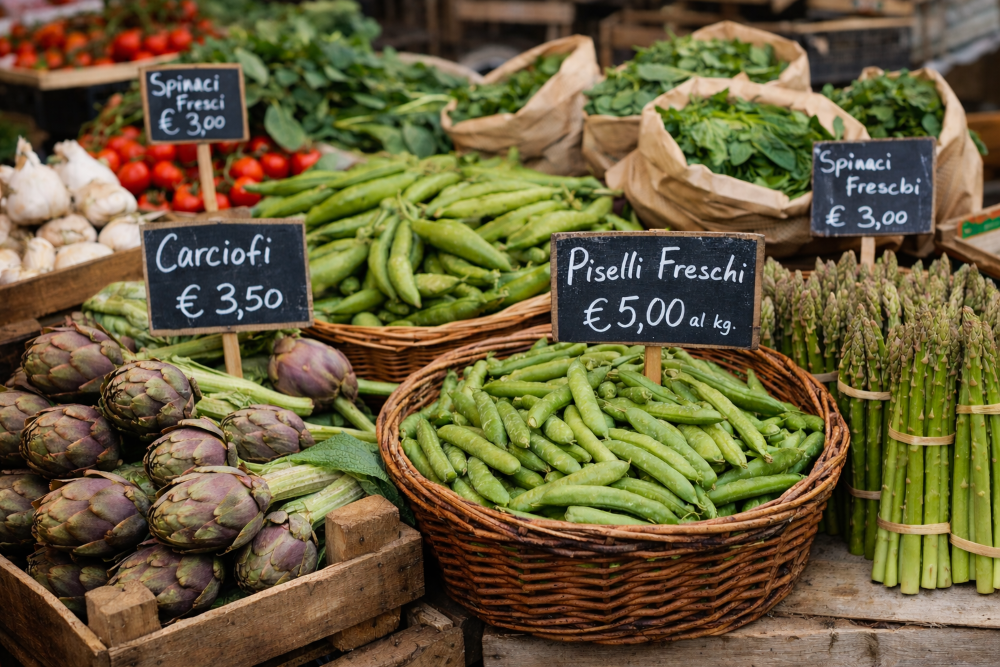
In Italy, spring doesn’t wait politely. It arrives with crates of vegetables that smell green, sharp, and alive. Artichokes with muddy stems. Early peas that barely make it home before being shelled. Tender spinach, asparagus, fava beans, herbs that still carry the morning chill. These ingredients don’t shout. They suggest.
And that suggestion is enough.
While Sweden is still shaking off winter—jackets zipped, scarves still relevant—we like the idea of letting Italian spring vegetables quietly set the mood. A way to open the season without pretending that it’s already warm outside. A way to bring a sense of spring into everyday meals, even when eaten as a takeaway in Stockholm.
Vegetarian lasagna becomes a bridge.
Layers of pasta that hold heat.
A béchamel that softens bitterness and brings everything together.
Vegetables that have been cooked just enough to stay themselves.
No tricks. No substitutes.
Artichokes don’t need to imitate meat.
Spinach doesn’t need to compete.
Asparagus doesn’t need to be “elevated.”
They just need time, salt, good fat, and a bit of respect.
In Italian kitchens, vegetarian lasagna has always existed—not as a modern invention, but as a seasonal response. You cook what the land gives you now. And in spring, that means green things, slightly sweet things, things that taste like change.
That philosophy feels especially relevant today, when takeaway in Stockholm often means fast decisions and quick meals. Vegetarian lasagna slows things down. It travels well, keeps its warmth, and still feels complete when you sit down at home, on a lunch break, or on a park bench that’s finally starting to see the sun again.
That’s why we don’t see vegetarian lasagna as an alternative at all. It’s often the most expressive version. The one where seasonality shows the most. The one that tells you exactly when it was cooked.
For a city that welcomes spring carefully and a food culture where takeaway is part of daily life, this kind of lasagna makes sense. Comforting, but not heavy. Fresh, but still warm. Thoughtful, even when eaten on the go.
You don’t rush the season.
You layer into it.
Let the cold linger outside.
Let the oven do its job.
Let Italian spring vegetables bring a little warmth forward—one portion at a time, even as a takeaway in Stockholm.
Vegetarian lasagna isn’t about compromise.
It’s about timing.
And timing, as always, makes all the difference.